
Launch Q1 2027
TOM 3
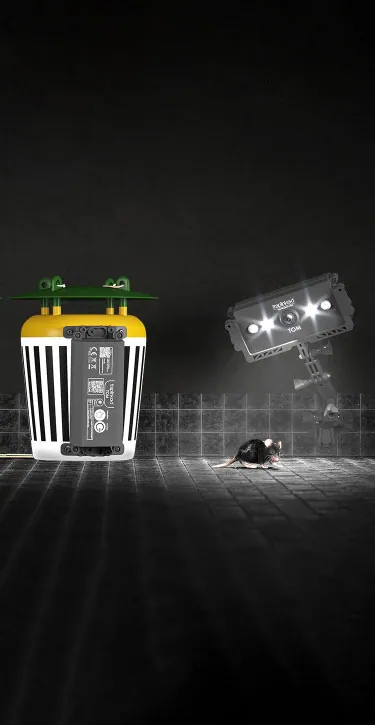
The camera sensor for rodents and insects: pictures from bait stations and insect traps sent over cellular straight to the traplinked app, with AI detection of rodents.

















Function
A picture from every bait station
TOM 3 sits in the bait station and reports as soon as something moves inside. Two motion sensors wake the device, which then takes an infrared picture that rodents cannot see.
The picture is sent over cellular to the traplinked cloud. There, AI checks every picture for rodents. You see the result and the picture in the app and the web dashboard.
Single sightings show up as a notice. Once the activity threshold you set is reached, the status turns critical.
In testing
How the AI detects rodents
Real pictures from testing: the red box shows where the AI detected a rodent in the picture, and the number shows how confident it is.
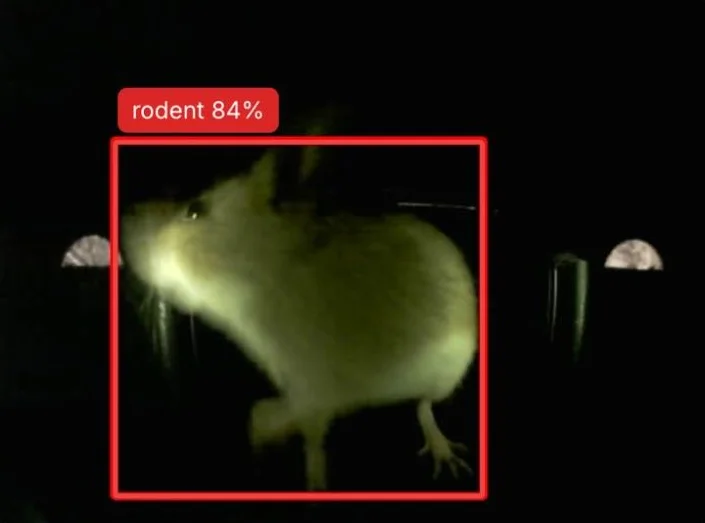
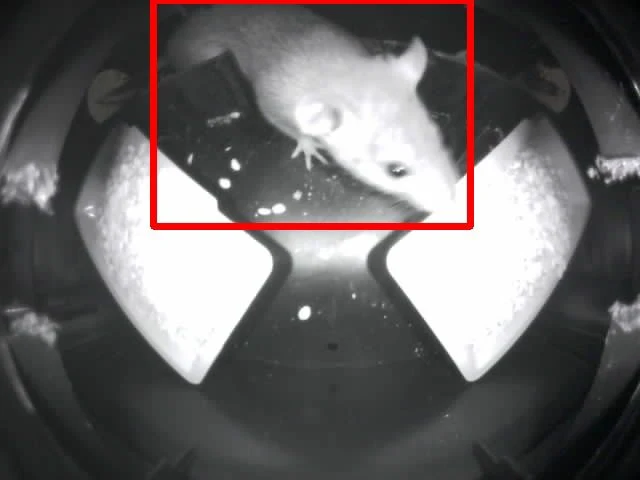
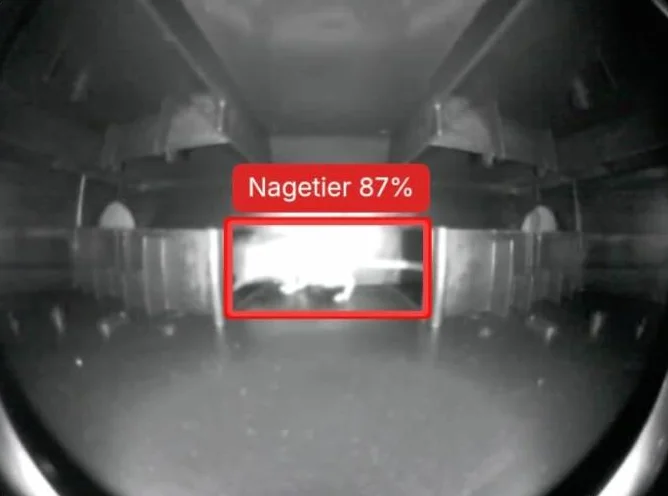
Pictures from testing with test devices, cropped from the app.
Process
How TOM 3 works
- 1
Motion detected
Two motion sensors wake the device in the station.
- 2
Infrared picture
Taken with infrared light that rodents cannot see.
- 3
AI check
Sent over cellular to the cloud, where AI checks every picture for rodents.
- 4
Alert
Picture and result appear in the app and web dashboard.
Documentation
Every finding backed by a picture
Whatever TOM 3 sees goes straight into the traplinked software, with time, device and location. This builds documentation without extra effort that you can show to customers and in an audit.
Alert with picture
Every sighting and every time the activity threshold is reached is stored with the matching picture.
History per station
The activity history shows when and how often something happened at a control point.
Proof without findings
The daily status report shows that the device was monitoring, even when nothing happened.
For audits
Pictures and alerts can support IFS, HACCP or BRCGS audits.
Call-out
Factory-set for the right station
Each TOM 3 is set up for one station during production, with the camera focused for it.
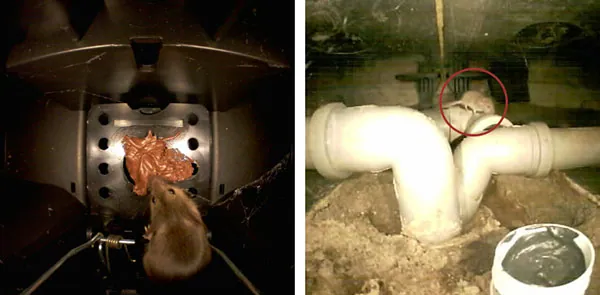 At launch
AF-Box
Rats and mice in the bait station.
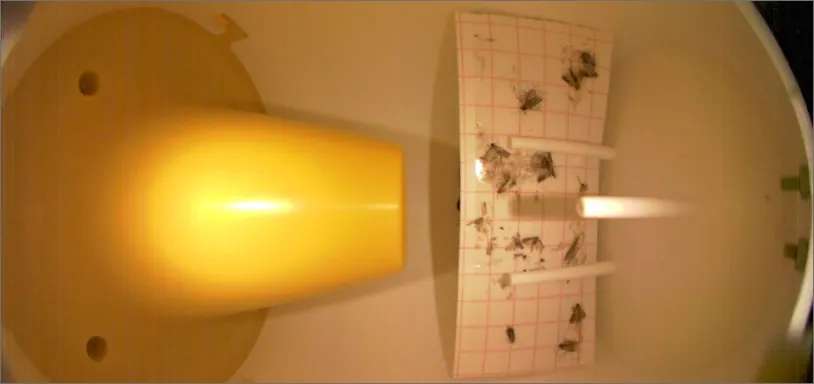 Coming next
Insects
Glue board monitoring, planned about three months after launch.
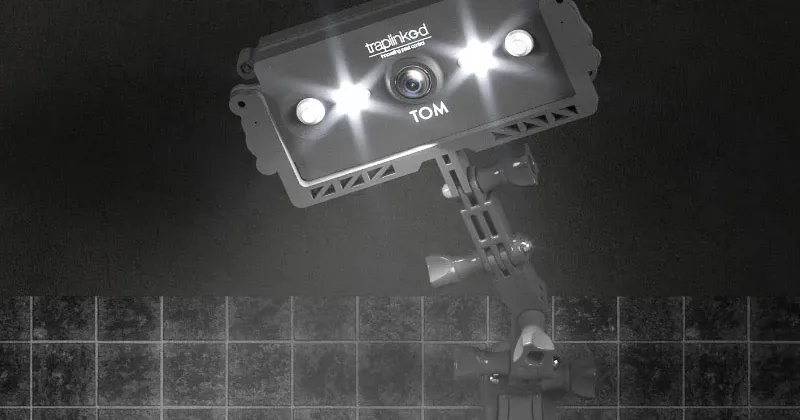 Planned
Flex stand
Free mounting for open areas.
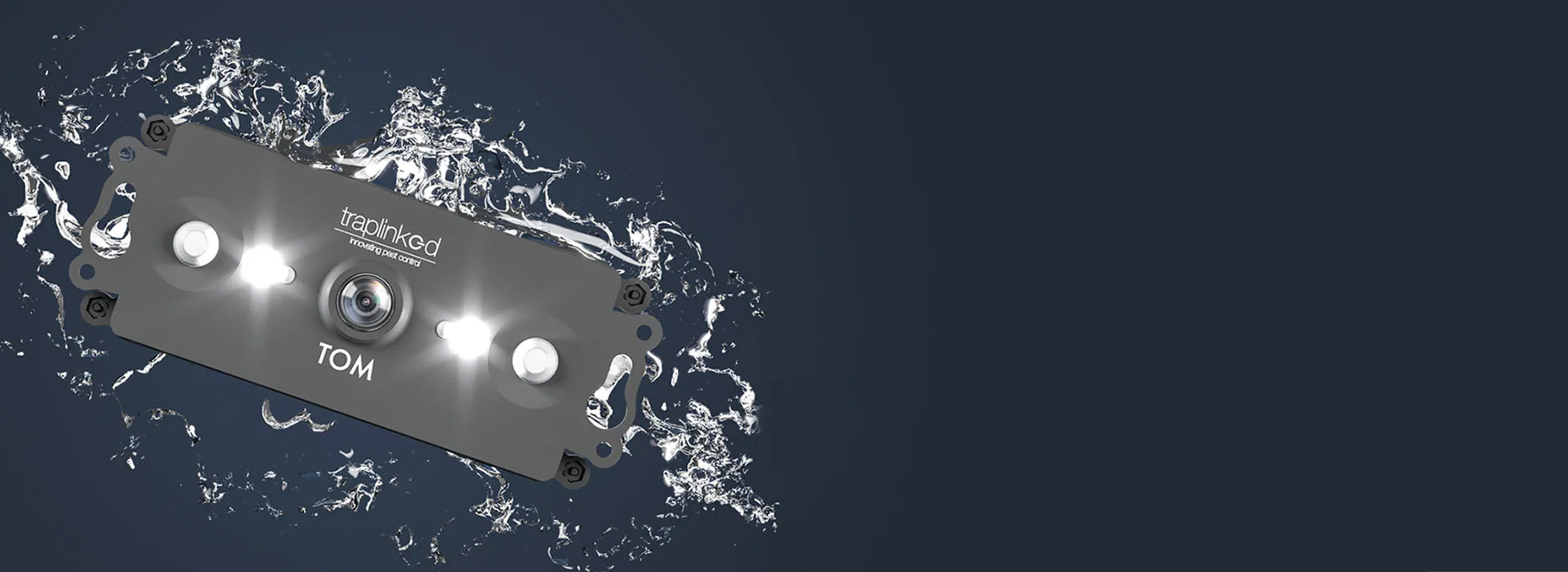
Battery and housing
Built for use on site
TOM 3 runs on two batteries you can replace yourself. Depending on activity and network coverage, one charge in movement mode lasts about 5 to 18 months, based on current estimates.
The housing is sealed with gaskets and designed for indoor and outdoor use. Once a day, TOM 3 reports battery level, signal and device status, even without activity.
Technology
TOM 3 at a glance
| Trigger | 2 motion sensors (PIR) |
|---|---|
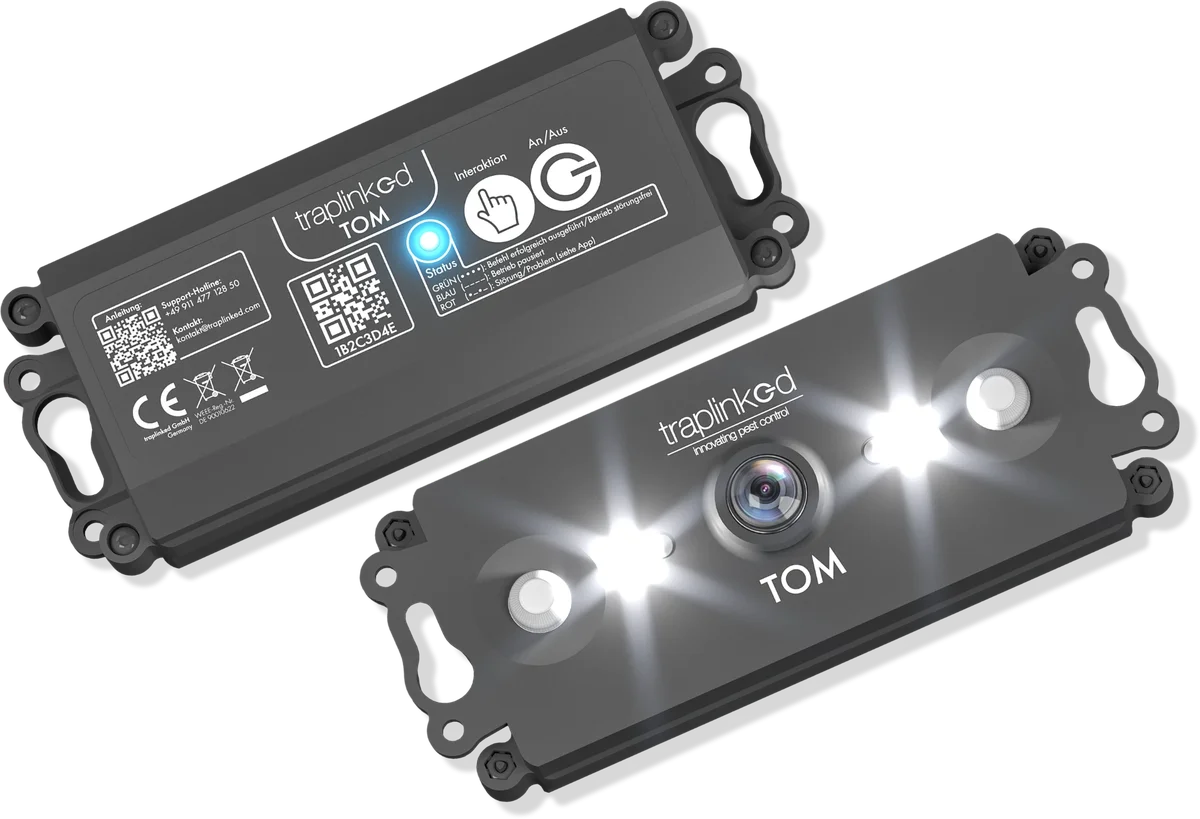
| camera | 5 MP, 225° wide angle, 2 infrared and 2 white-light LEDs, focus factory-set for the station |
| Operating modes | Movement (pictures per day can be limited) or fixed interval |
| Analysis | AI in the traplinked cloud, adjustable activity threshold |
| Connectivity | LTE-M (Cat-M1) with built-in SIM, alternatively Wi-Fi 2.4 GHz, Bluetooth for setup |
| Status report | daily battery, signal and device status |
| Battery | 2 × Li-ion 21700, replaceable by the customer |
| Housing | approx. 141 × 64 × 33 mm, ABS, with gaskets, for indoor and outdoor use |
| Updates | Firmware over the air, remote settings |
| Certification | CE |
Preliminary information, as of 11/2026. TOM 3 is in the testing phase, launch in the first quarter of 2027. All details are preliminary. Battery life is estimated from lab measurements and depends on activity, settings, network coverage and temperature.
TOM 3 for your customers? Get in touch.
We will show you how TOM 3 works and keep you posted on availability and pricing.